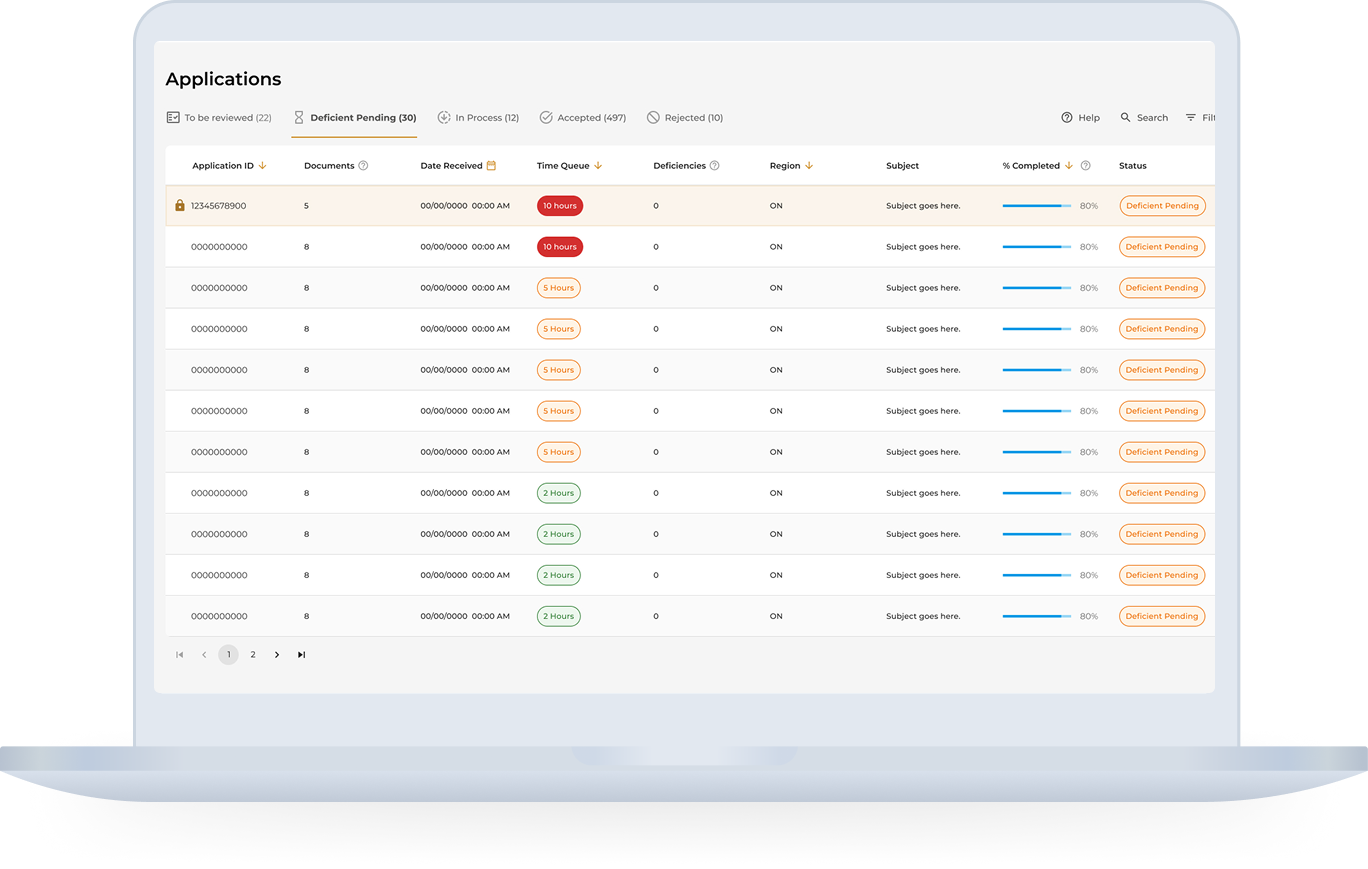
|OCR
|OCR
Role
Lead UX Designer
Tools


For this project, the client is a company that serves as an intermediary between car dealers and major banks. They aim to reduce loan application processing costs by over 10% using AI, through a solution that integrates automation with manual processes. To achieve this, our team developed an OCR (Optical Character Recognition) solution that reads and extracts information from documents sent by dealers, quickly determining if customers are eligible for funding.
Discovery
UX Research
Prototyping
Testing
Design System
High Fidelity Prototypes
Furhter Testing
Hand Off
Play Off
DISCOVERY
Project Scope
To become more competitive and appealing to car dealers, the client needs to offer faster loan funding decisions that dealers can present to their customers.
Currently, the screening and loan funding process can take hours due to its manual nature. Screening and funding agents need to manually assess many documents to ensure accuracy. Additionally, most applications contain errors made by dealers, which cause delays.
To address this issue, our company has been hired to develop an AI solution that enables faster document reading and information extraction from dealer submissions, to validate errors and automate the funding process.
Project Goals

To define the scope, features, user interactions and deliverables for the MVP phases and beyond.

To define User Personas as well as their current pain points, expectations, and current workflows.
To understand current processes and propose a new User Journey that integrates the AI solution.

To design a UI that is intuitive and encourages user adoption and is independent of third-parties.
What does success looks like?

Application funding approval time is reduced from 10 hours to at least 2 hours

80% of the client’s staff is focused on Funding applications as opposed to screening applications for errors
Users easily adopt the new solution and prefer to use the new UI as opposed to their previous software and methodologies
Potential Constraints
The current LOS (Loan Origination System) software used for application screening and approval is owned by a third party, making integration more challenging both technically and in terms of user experience.
Our team has access only to our client’s processes and data and cannot influence the processes of car dealers.

For the best experience, our team ideally needs to develop our own document splitting and classification solution. However, this might be beyond the scope of the project.

The client hasn’t had previous experience working with UX | UI teams
Deliverables


RESEARCH
Research Objectives
To identify existing gaps in the user experience

To understand users’ motivations and pain points
To clarify processes around application funding
To identify any technical requirements and further potential constraints
Meetings and Existing Documentation
At the start of the project, we did not have direct access to Funding Analysts. Instead, we met with Managers and Technology Advisors to understand the Funding Analysts’ needs, pain points, and current processes, as well as technical options and constraints.
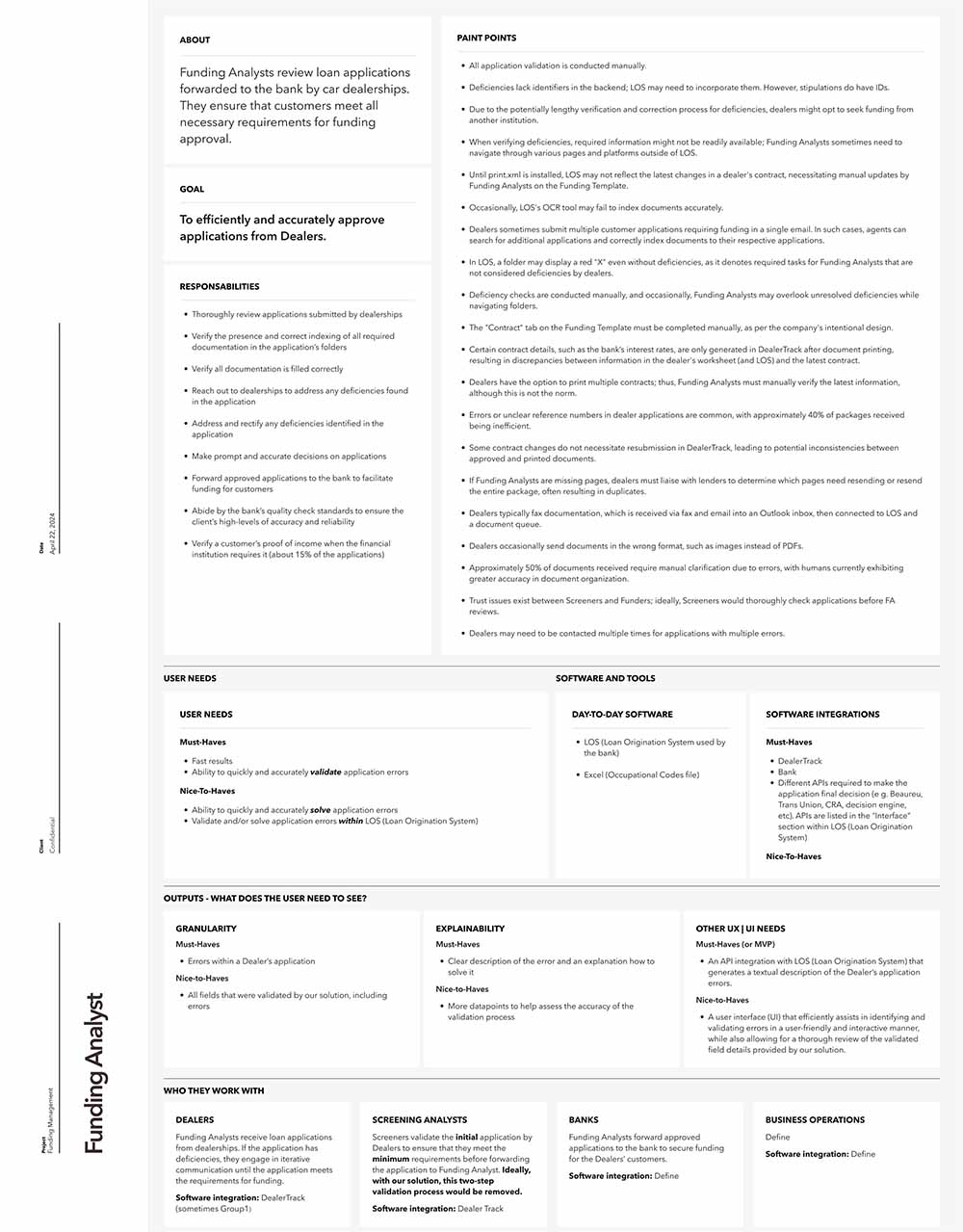
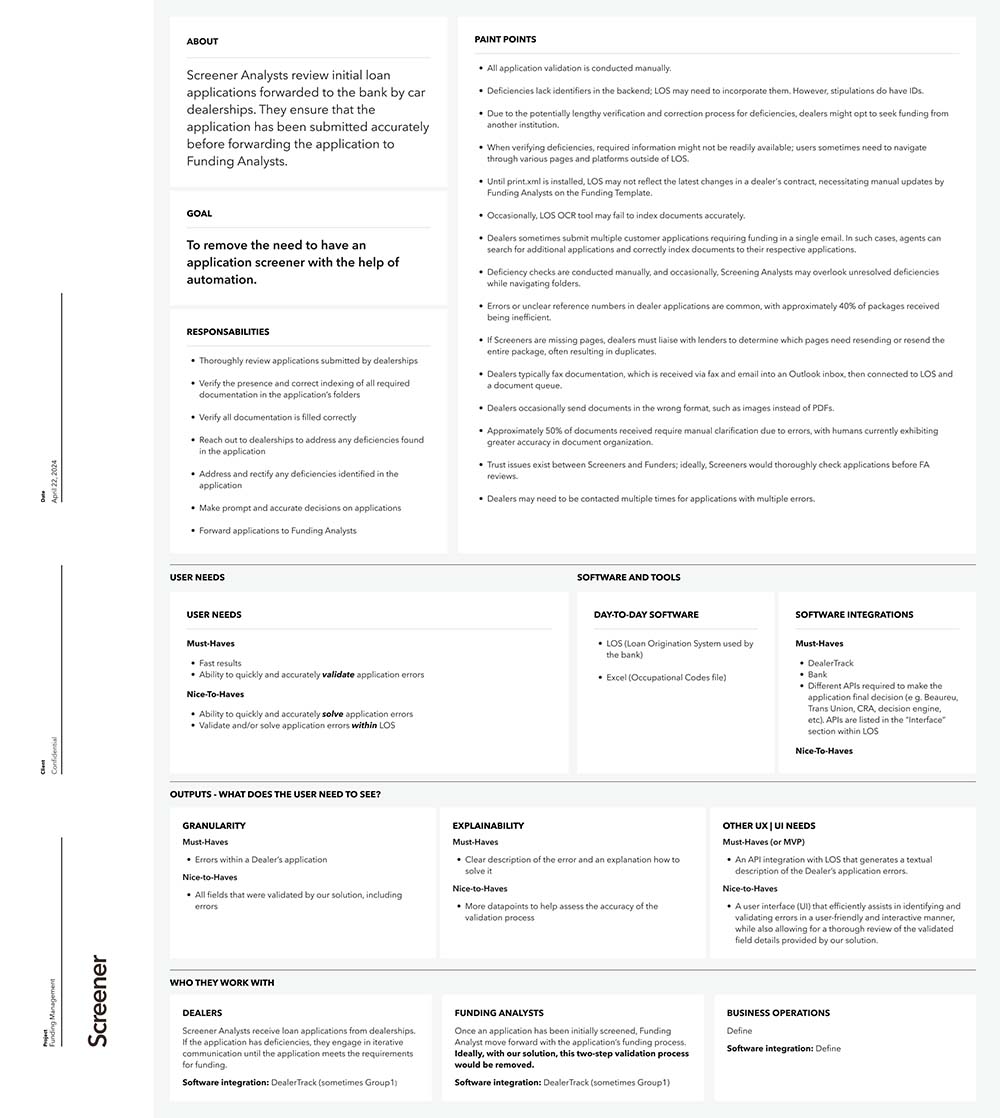
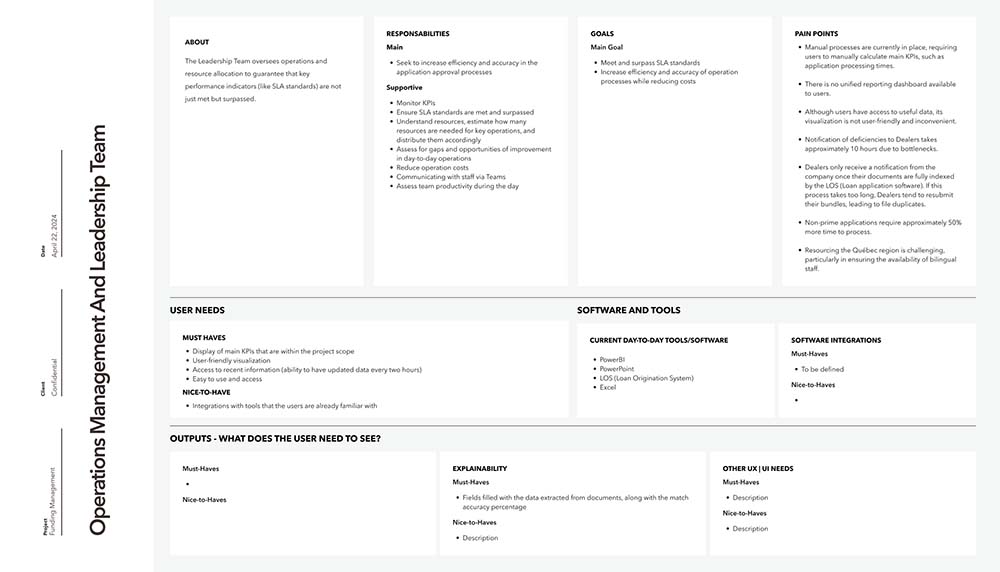
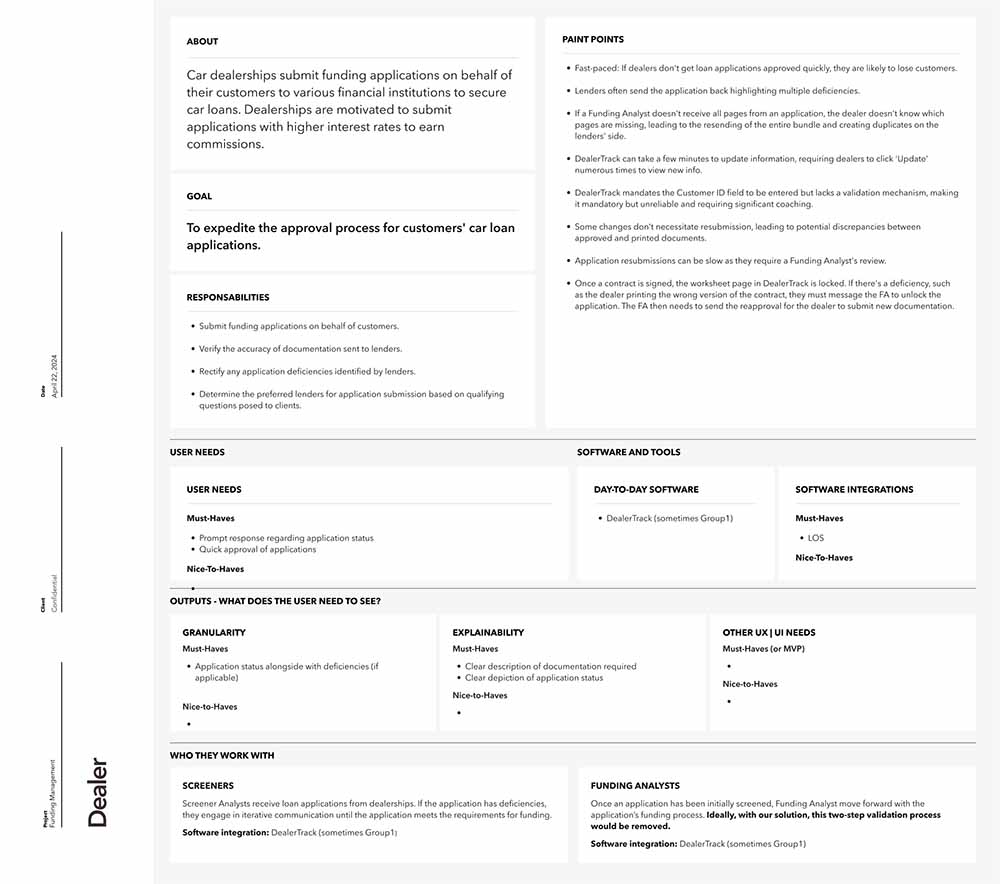
The client also provided demo videos and documentation explaining the application funding process from both the dealers’ and the company’s perspectives. Using this information, I developed user personas and future user journeys.

Funding-Analyst-Persona
Screener-Persona
Business Opperations User Persona
Dealer-Persona
User Stories
User Journey
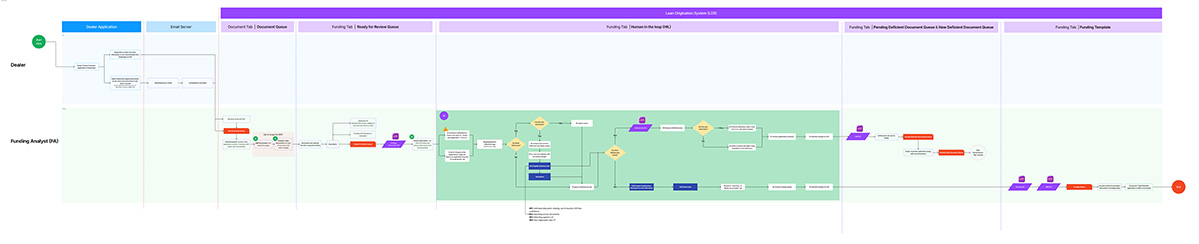
I worked alongside the Business, Engineering, and Data Science teams, as well as with the client, to define the following user journey and determine how the new AI solution would be integrated with the client’s current processes and tools.
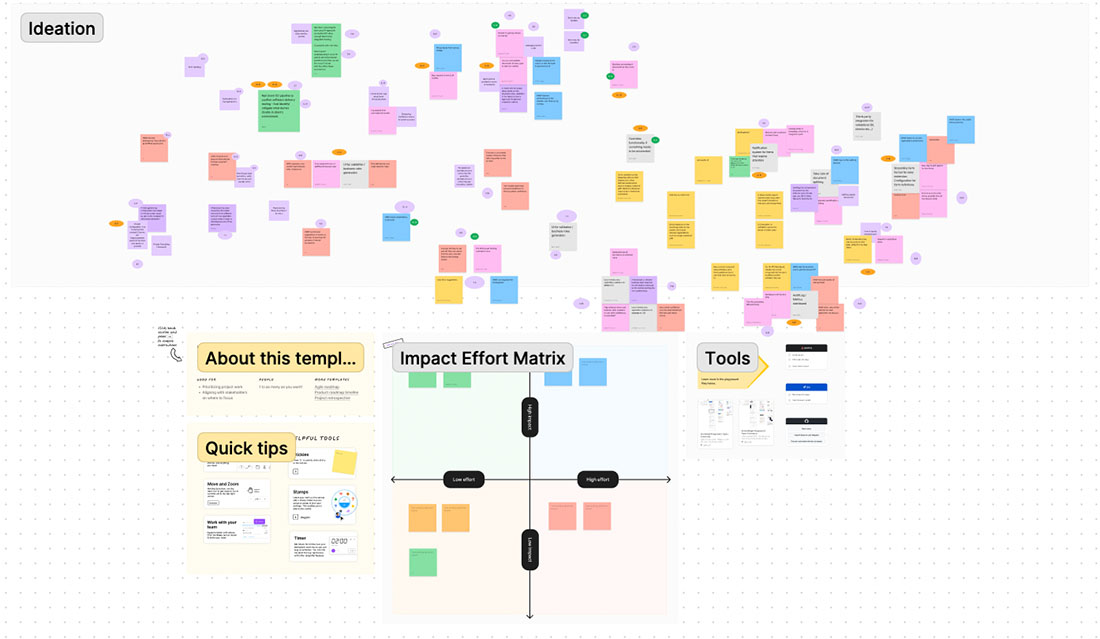
To define the final version of this journey (as of now) multiple iterations, meetings and testing were required.
The goal was to make the user journey as automated as possible so that Funding Analysts could focus on approving funding as fast and accurately as possible.

UI DESIGN
Wireframes
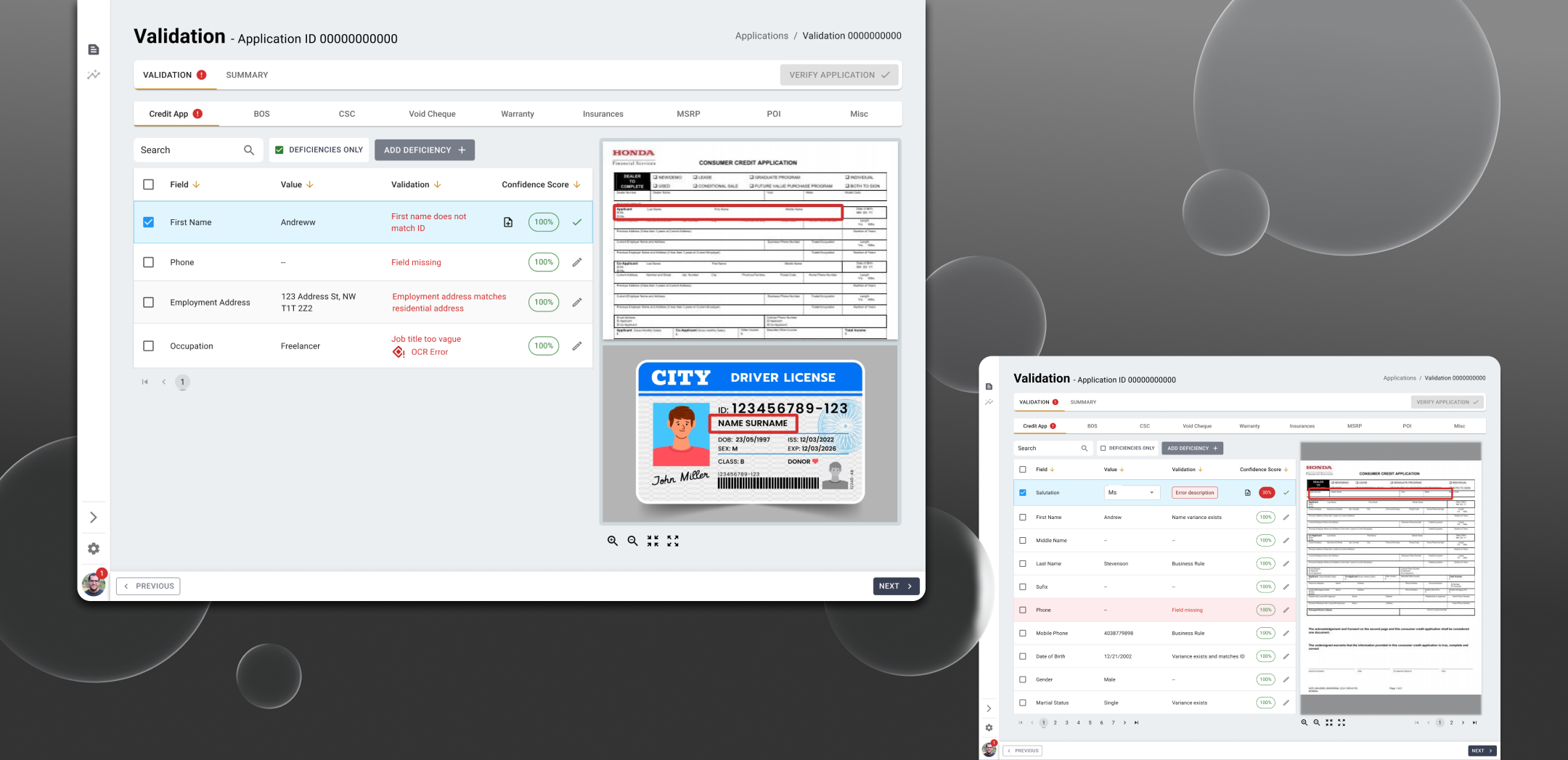
The main screem was divided into three simple sections: data entry revisions (where users validate and correct issues detected by the OCR), deficiencies review (validating application business rules), and a final read-only review section. In the future, the plan is to further automate this process as we continue to develop the technology and users gain trust in our solution.
USABILITY TESTING
To do usability testing, I used a combination of unmoderated remote testing by using Maze and moderated remote testing by conducting meetings over Google Meets 6 Participants participated in the first part of the usability test.
FINAL DESIGN